Showing posts with label Book Review. Show all posts

Saturday, 14 June 2014

David and Goliath - A Book Review

Before you go too far - if you came here looking for the biblical story about David and Goliath sorry you may not find much here even though the premise is taken from there.

A bit of background on how I laid hands on this book. This was a key "take away" (yeah literally) from our annual corporate conference in Jaipur few months ago. Hence I now have a copy signed by our CEO. We not being a "large" organization (a David) we've always wondered how we can compete with the biggies (the Goliaths). It was quite a timely piece of insight given to us as we started a new year with rather audacious goals. 

The general context of this book is that a strength is not necessarily a strength and a weakness is not necessarily so. Malcolm Gladwell being himself goes to a great extent to prove this. Most of it of course does make sense. The text in bold and italics below have been taken verbatim from the book.

To be true to the title of the book, it begins with an analogy based on the biblical David and Goliath story. It talks about how David's agility overcame Goliath's raw size and power. Also, the fact that how Goliath's source of power - his giant size also became the source of his weakness not to be able to adapt to David's attacks.

The next chapter talks about why someone who is lacking something is necessarily not at a disadvantage. He bring about various examples from Lawrence of Arabia to Vivek Ranadive - a silicon valley nerd becomes a basketball coach at his daughter's school. He says "To play by David's rules you have to be desperate. You have to be so bad that you have no choice." He claims one's disadvantages makes themselves to be desperate and hence to be able to win.

He then talks about parenting which of course struck a very close chord here. He talks about rich vs poor parents and how being rich is not always advantageous beyond a point. He even claims that as the income of parents get high enough parenting actually becomes harder. This probably explains why riches of one generation is not always sustained in the next and then the cycle repeats.

He talks about an interesting concept called "relative deprivation" coined by a sociologist Samuel Stouffer. According to him "we form our impressions not globally, by placing  ourselves in the broadest possible context, but locally - by comparing ourselves to people "in the same boat as ourselves. Our sense of how deprived we are is relative." A very interesting statement was "one of the things about Harvard is that there's just so many smart people there that it's hard to feel smart there".

He moves on to mental disabilities and how it actually works out in favour of them and the people around. He says innovators need to be disagreeable. "They are people willing to take social risks - to do things that others might disapprove of". Maybe this is what is also known as the ability to challenge the status quo?

Another interesting quote - "Courage is not something that you already have that makes you brave when the tough times start. Courage is what you earn when you've been through the tough times and you discover they aren't so tough after all.". Read that twice (or more if needed) but it does make a lot of sense. :-)

He goes on to state many more examples from history such as Martin Luther King's struggles etc where someone literally leveraged on their disadvantages to turn them to into advantages.

Of course it doesn't mean that disadvantages turns into miracles by default for everybody - one has to really work at it and yes it can be overcome. 

Happy Reading!!

C

Thursday, 21 November 2013

TheElephantCatchers By Subroto Bagchi - A Book Review

Usually I rate a book by the number of dog ears I create while reading the book whenever I find something interesting. In that sense this has been the most "abused" book where there has been way too many dog ears throughout the book. This book was recommended by the book keeper in Chennai Airport while I was surfing through the rack. He just said "This is the latest from Mr. Bagchi Sir". Am still wondering why I bought into that sales pitch - but thankfully so.
In the corporate world I've always wondered how organizations transform themselves many times bigger than what they started with. Not sure if there are any business degrees or courses which would teach this or one just learns by experience. Thanks to Mr. Bagchi I was able to get a sneak preview of some of his experiences of how MindTree grew to where it is right now. It was a rather bold move to share in public some of such experiences. Am sure there is a lot more yet to be revealed but in my mind this was just a good enough start for kids like me.
The premise of this book is about what he calls as "breakthrough growth". Not a gradual growth in single digit or the lower 2 digit %ages year on year but a transformational growth. After I got into sales and business development a little over a year ago I've always wondered if I was suitable for this job. Apparently I am a "farmer" rather than a "hunter", where this book describes a bit about both. Interestingly this book even talked about a scenario where organizations move a technical person into sales just because he/she was there. That was so me!! This book is far from theoretical. He has picked up examples that are so down to reality that one would see day in and out.

As usual I've taken a few excerpts from the book that I found to be worth mentioning here. 

Any organization may go through waves of difficulties every now and then. He gives and example of a Swamiji from Siddaganga Mutt where he says "Swamiji's most fundamental ally has been his sense of purpose.... That purpose is so powerful that it permeates everything; it is the force that binds everyone in the Mutt and creates alignment".

Talking about growth and strategy - he says "You don't need to think of strategy if incremental growth makes you happy." I've always wondered what happens in the so called "strategy" sessions and even contributed to some to some extent. I was never convinced myself totally on what I've given so far. This book literally shattered those ideas. He says "Great strategy is not about a pie chart sliced and diced to infinity, then multiplied with a radar graph and divided to death by a 3D histogram. Great strategy is simplicity that even the doorman can understand."

He clearly brings a difference in the type of (sales) people you need to have for growth. He uses an analogy of catching rabbits vs elephants. "Unlike an operation to catch rabbits, trapping an elephant calls for expertise over enthusiasm..... You catch a rabbit to eat its meat. It has consumptive value but no regenerative value. You don't catch the elephant to eat it; once caught and tamed, it is meant to be an economic resource. While the rewards are great, the risks are very personal, and a failed enterprise can bring grievous injury and may even prove fatal." I often think I've been a rabbit catcher and hope to become an elephant catcher sometime soon.

For a "village" to transform to a "city" he says "The social contract that laid the foundation of the village will have to be replaced with one for a city. It is time to step back and rethink the purpose of the organization, and be ready to remodel its structure and functioning".

Coming from a medium sized organization one of my common / every day questions is - "How do I breakthrough with a prospect who is already entrenched by other biggies in the industry?".  This book has a few tips for that as well. For eg., "look for what you may have in common with the customer beyond your expected capabilities and use it to create the connect".

Now this is where it came very close to home (literally) - "Just as you need to encourage good salespeople to continue to sell rather than become supervisors, you also need to watch out against creating accidental account managers. This happen when, for instance, a successful delivery guy in a software company, or a creative person in an ad agency, is put in charge of a particular account because he delivers well and has developed a relationship of trust with a client". Not sure if I would've got this job if my boss had read this book. ;-) Am still around....so probably it's not too bad. Am sure there is a loong way to go.

A great insight has been about outlining qualitative strategies. "What is the overall competitive objective? What will I sell, to whom and why? Who will I not sell to and what ill I not sell?" Questions like these are very real and one needs to have a reasonable idea about them.

One of the general perceptions of Indian IT services companies is that we are "glorified body shoppers". He says "If the customer directly engages with out people, while we as a company remain pure intermediaries how would we build employee loyalty?". A very serious question indeed and especially when it comes to having your team Onsite. Employees tend to have more affinity towards the customers than their own organizations.

This book moves on to talk about how even a board should be selected. Things that one does not necessarily think about in the middle-management or front line leadership level. He says "It is one thing to have a stellar board; it is quite another to use it effectively. The latter requires the capacity to seek and receive counsel.... Above all, it requires intellectual honesty".

Every now and then organizations deploy "consultants" to review the strategy and performance. He says "you will invariably get all you need from the consultant in the first six months of engagement. After that, whoever they may be, they are simply repeating themselves".

In terms of intellectual transformation one of the key things that moves one from a "glorified body shopper" to a consulting / services company is the value we bring to the table. He says "In large IT deals the client requires its associate companies to go beyond being "order takes" to becoming "order makers". They can no longer wait for the client to ask them to do something. Instead, they must imagine a solution, take the idea to the client, think through the implementation issues ad lead the way." This was something I felt personally and also received as feedback from one of my customers.

Normally business books don't talk about firing people unless it is a complete HR related theme. Mr Bagchi brings that up as something an organization should be skilled at as well. He says "Fire with reason, fire as the thought-through last resort, fire if you must, fire with fairness, take expert help, be reasonable, keep in mind the indignity of the person being fired may suffer in such a situation and be cognizant of the material difficulty the person may have to face".

One key message to the organization's leaders here - "Often, employees have no idea about the thoughts and points of action engaging the leader between the statement of objectives in the beginning of the year and an analysis of the quarter-end results. Transparency is key. It is important for a leader to regularly publish what is on his / her mind to the entire set of next-level employees."

Finally he wraps up the book with what happens during adversity. He says "Despite good intent, top management openness, support for an individual's career development and the overall growth momentum of the organization, not everything will work out the way you want. Don't get disheartened; a certain amount of failure, anguish, alienation and disappointment are rites of passage that every growing company must encounter..... If the existential question looms large and self-doubt takes over, remind yourself of the larger purpose and tell yourself that pain is inevitable but suffering is optional". When things go out of control - "When extraordinary events overtake us it is time to do ordinary things extraordinarily well".

Happy Reading!!

C

Thursday, 25 April 2013

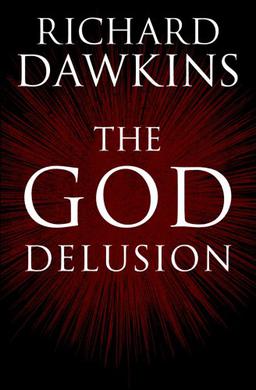
The God Delusion - A Book Review

If I were to summarize this book in a sentence - A cleverly written book. The author obviously knows what he is talking about with all the painful (??) research he must've done over the years. So yes, this book is about Atheism and why the concept of God is a delusion as the title says.
When the book begins with a quote - "Isn't it enough to see that a garden is beautiful without having the believe that there are fairies at the bottom of it too?" it pretty much sums up the tone for the entire book. The book as such is a huge collection of quotes, passages and lectures from many people with a bit of commentary interlined by Mr. Dawkins. To know that such a book can actually become a bestseller - we must give it up for Dawkins. A clever man indeed. Inspite of being an Atheist book the word   God was written with the G instead of g throughout. Guess he couldn't break the rules of grammar? When did God influence grammar? Hmm... 


The basic premise of the book revolves around the differences between Darwinistic theory of evolution and the "biblistic" theory of creationism. He very clearly puts a reasonable boundary for his thoughts. He does not attack any and every representation of God. He limits himself to supernatural God and specifically about Abrahamic religions (Jewism, Christianity & Islam). Although he briefly touches upon other religions such as Hinduism, he does not consider Buddhism as a religion. He calls it a philosophy.

There is an interesting 7 scale categorization made to distinguish different levels of Theism and Atheism starting from someone who just does not believe but knows there is God and one who knows there is no God.

Rather than proving or disproving the concept of God this book brings out all the dirty linen of Christianity, Islam and Jewism articulated in a very succinct fashion that it would make one cringe to be called a Christian or Muslim or a Jew. It would make one wonder - is that  really what we are basing our beliefs on? Unfortunately (or fortunately?) there has been enough material for him to collect and paint A picture. This book delves a lot on articulating various stupid acts that has happened in history in the name of religion rather than proving anything one way or the other. Am sure there are enough acts of stupidity in the name of science, but that is not the topic of this book is it? :-)  

Towards the end he attempts to look at the "softer" parts of religion where it is supposed to be helping mankind. I don't think he had any strong argument to prove why religion cannot be helpful for consolation or inspiration.

Eventually the book ends with a scientific explanation for an illusionary world which was long captured in Hinduism as "Maya".

All in all an interesting read, a good collection of passages that support the theme, but does not seem to prove anything either way.

There were quite a few interesting quotes throughout the book. As always I've selected a few that interested me the most. 

Some people have views of God that are so broad and flexible that it is inevitable that they will find God wherever they look for him.

We have names for people who have many beliefs for which there is no rational justification. When their beliefs are extremely common we call them "religious"; otherwise they are likely to be called "mad", "psychotic", or "delusional".

Many of our human ailments, from lower back pain to hernias, prolapsed uteruses and our susceptibility to sinus infections, result directly from the fact that we now walk upright with a body that was shaped over hundreds of millions of years to walk on all fours. 

Predators seem beautifully designed to catch prey animals, while the prey animals seem equally beautifully designed to escape them. Whose side is God on?

Could irrational religion be a by-product of the irrationality mechanisms that we originally built into the brain by selection for falling in love? Certainly religious faith has something of the same character as falling in love (and both have many of the attributes of being high on an addictive drug).

Bernard Shaw - The fact that a believer (in God) is happier than a skeptic is no more to the point than the fact that a drunken man is happier than a sober one.

At what age does any developing embryo, of any species become capable of suffering?

"Really", for an animal is whatever its brain needs it to be, in order to assist its survival. And because of different species live in such different worlds, there will be a troubling variety of "reallys".

I guess I come under a category somewhere between a "Deist" (who apparently believes in a supernatural intelligence, but one whose activities were confined to setting up the laws that govern the universe in the first place) and a Pantheist (where God is used as a non-supernatural synonym for Nature). 

Guess the bottom line is - Vaazhavae Maayam!! (Life is a Delusion!!) :-)

Cheers
C

Sunday, 3 March 2013

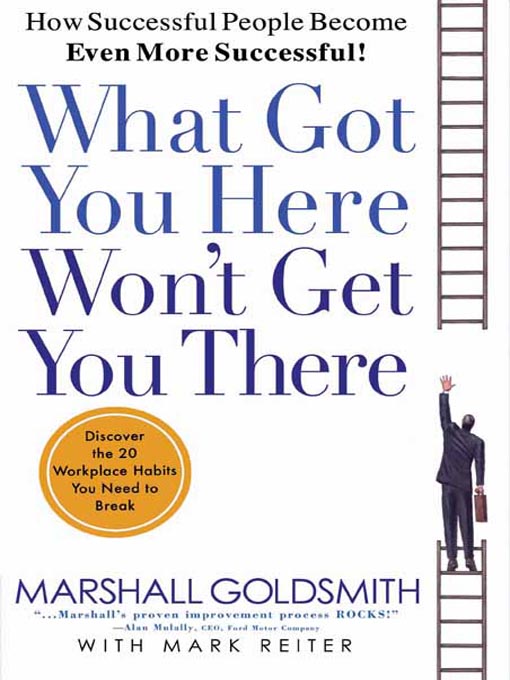
What Got You Here Won't Get You There

This book has been by far the longest read book I've ever had. I think I started reading this about more than a year ago and for some reason kept ignoring it in spite of having it in my backpack every day. Among many other reasons Angry Birds was definitely one that kept me away from completing this book sooner. ;-) Finally made it a few weeks ago and eventually got time to write about it.

This is yet another book which reveals a few "aha" moments where you smack yourselves wondering why you didn't realize this earlier. The funny thing is, as I read the book I continue to make the same mistakes, but the realization happens more sooner than later. Should try harder I guess to avoid repeating the same in future. Let's see...

The premise of the book is simple - the very same traits that made you "successful" till now will pull you down to move ahead. Paradoxical is what I thought initially, but few pointers did bring out the "aha" or rather "oops".

Marshall talks about 20 basic flaws that leaders normally get into. By leaders we don't have to look at the executive level. Anybody who's had the responsibility for more than his / her own work is a leader in some sense - regardless of corporate designation.

  1. Winning too much: The need to win at all costs and in all situations – when it matters, when it doesn't  and when it’s totally beside the point.
  2. Adding too much value: The overwhelming desire to add our two cents to every discussion.
  3. Passing judgement: The need to rate others and impose our standards on them.
  4. Making destructive comments: The needless sarcasms and cutting remarks that we think make us sound sharp and witty.
  5. Starting with “No,” “But,” or “However”: The overuse of these negative qualifiers which secretly say to everyone, “ I’m right. You’re wrong.”
  6. Telling the world how smart we are: The need to show people we’re smarter than they think we are.
  7. Speaking when angry: Using emotional volatility as a management tool.
  8. Negativity, or “Let me explain why that won’t work”: The need to share our negative thoughts even when we weren't asked.
  9. Withholding information: The refusal to share information in order to maintain an advantage over others.
  10. Failing to give proper recognition: The inability to praise and reward.
  11. Claiming credit that we don’t deserve: The most annoying way to overestimate our contribution to any success.
  12. Making excuses: The need to reposition our annoying behaviour as a permanent fixture so people excuse us for it.
  13. Clinging to the past: The need to deflect blame away from ourselves and onto events and people from our past; a subset of blaming everyone else.
  14. Playing favourites: Failing to see that we are treating someone unfairly.
  15. Refusing to express regret: The inability to take responsibility for our actions, admit we’re wrong, or recognize how our actions affect others.
  16. Not listening: The most passive-aggressive form of disrespect for colleagues.
  17. Failing to express gratitude: The most basic form of bad manners.
  18. Punishing the messenger: The misguided need to attack the innocent who are usually only trying to help us.
  19. Passing the buck: The need to blame everyone but ourselves.
  20. An excessive need to be “me”: Exalting our faults as virtues simply because they’re who we are.
Thanks to this link I did not have to type all of the above. :-)

Of course not every concept hits you (hard) all the time. Highlighted below a few excerpts which made this book to be a "must read" for anybody (in my perception of course).

(Text in italics are picked from the book)

  • Adding too much value - It is extremely difficult for successful people to listen to other people tell them something they already know without communicating somehow (a) "we already knew that" and (b) "we know a better way". You may have improved the content by 5% but you've reduced my commitment to executing it by 50% because you've taken away my ownership of the idea. Try to remember this next time you try to implement a change and you want to involve your team to be a part of the change.  
  • Telling the world how smart we are - Being smart turns people on. Announcing how smart you are turns them off. All along I always believed in the principle of self-marketing. It looks like thin-ice after all. Gotta tread carefully.
  • Let me explain why that wont work - "If you catch yourself frequently saying, "Let me tell you why that won't work", you know what needs fixing. Can't explain the pleasure of proving someone wrong. Especially if that is going to get yourselves in the limelight. What you lose by this is people approaching you for any positive critique of an idea.
  • Making excuses - If we can stop excusing ourselves, we can get better at almost anything we choose. Such a profound statement. Very easy to fall into this pit and very convenient as well. Are you ready to take ownership and responsibility?
  • An excessive need to be "me" - I behave this way, and I achieve results. Therefore, I must be achieving results because I behave this way. In other words its simple egotism. However this is one of the key concepts of this book. Just because you were successful because of a particular behaviour it is no free pass to repeat the same and expect a bigger success. Adaptation is key.
  • People will do something  - including changing their behaviour - only if it can be demonstrated that doing so is in their own best interests as defined by their own values. People only change their ways when what they truly value is threatened. I've always wondered why people don't agree with me when the expected outcome is going to be valuable to them. The key here is "as defined by their own values". Have you attempted to understand what their values are?
  • In the "can-do"  environment in an organization there is no system for honouring the avoidance of a bad decision or the cessation of a bad behaviour. Especially at this time of the year when the annual review happens, can we measure avoidance of stupidity as a key objective?
  • When sharing information or emotion, we have to ask "is this appropriate and how much should I convey?". Sometimes we do this delibrately to get someone else into trouble. As in poker, the greatest trick is to know "when to fold" not go "All In" every time.
  • It is a whole lot easier to see our problems in others than it is to see them in ourselves.Gives a whole new meaning to "a thief can catch a thief". It's so easy to be objective with others than ourselves.
  • An apology gives you a sense of closure. Closure lets you move forward. The idea is to move on into the future and not let the past hold you back (emotional luggage).
  • Feedforward - "Helping people be right is more productive than proving them wrong". This is a bit different to "feedback" that we are all used to. I think our performance review systems should be changed 180 deg. 
  • Measurement - Everything is measurable if we're clever enough to see that it needs measuring - and can devise a way to track it. Gotta remember to use this whenever we need to talk about "metrics". Most often we prefer to stay in the dark being ignorant to the need to measure something.
So there you go... hope you had a moment or  2 of aha or oops. This book was gifted to me by some of my team members. Probably they wished I read and act on some of the lessons mentioned. Tough luck guys....it took a while for me to Get Here. Wishing you all the best to Get There!!

Happy Reading

C

Friday, 6 July 2012

Blue Ocean Strategy - A Book Review

Blue Ocean Strategy - A book I've been wanting to read for years and  finally got my hands on it during my last trip to India. If I were to summarize it in a sentence - A pragmatic guide for organizations to differentiate themselves in the market. No - I did not lift this from the back cover. ;-) It very candidly discusses reality as it is without covering it up. For eg., "Organizational politics is an inescapable reality of corporate and public life." Books of this nature are mostly biographical or heavy research material which describes what someone did. This book gives an almost step by step procedure on what someone should do to build what they call as an "uncontested market place". The flow of the book cannot be any better. It begins with explaining what a "Blue Ocean" means, moves on to guidelines on formulating, executing and finally sustainability and renewal of the strategy. This last bit about sustainability and renewal is something not many people think about. Mr. Kim and Ms Mauborgne have really laid it out all the way through the end....and beyond. Of course I do not and cannot talk about every little tip the book offers, but wanted to paraphrase a few concepts that simply stands out. 

Beating Competition - The only way to beat the competition is to stop trying to beat the competition. (Sounds like Karate - the art of fighting without fighting). :-)

Value Innovation - Innovation without value tends to be technology-driven, market pioneering, or futuristic, often shooting beyond what buyers are ready to accept and pay for. Value innovation occurs (only) when companies align innovation with utility, price and cost positions. Value Innovation aims at decreasing costs and increasing customer value. Do not deliver the most sophisticated technology without delivering exceptional value.

Strategy Canvas - A tool for mapping your strategy against peers based on factors that affect competition among industry players, current and potential competitors. To fundamentally shift the strategy canvas of an industry, you must begin to reorient your strategic focus from competitors to alternatives, and from customers to non-customers of the industry.

Four Actions Framework
  • Eliminate factors that companies in your industry have long competed on...factors taken for granted even though they no longer have value or may even detract 
  • from value.
  • Determine factors to reduce cost where companies tend to over serve customers (for no gain)
  • Raise the value to customers by eliminating compromises your industry forces customers to make.
  • Discover entirely new sources of value for buyers and create new demand
Characteristics of a good strategy - Focus, Divergence and a Compelling Tagline. If not, strategy is quite likely to be muddled, undifferentiated and hard to communicate. It is quite likely to be costly to execute.

Understand your Buyer Groups - There will be different Buyer groups in any organization. The Purchasers who pay for the product or service may differ from the actual users, and in some cases there are important influencers as well. Although these groups may overlap, they often differ. When they do, they frequently hold different definitions of value. Look across your buyer groups and redesign the value curves to focus on a previously overlooked set of buyers.

Hidden Blue Ocean - Untapped value is often hidden in complementary products and services.The key is to define the total solution buyers seek when the choose a product or service. A simple way to do so is to think about what happens before, during and after your product is used. Can you identify and eliminate the pain points through complementary product / service offering across each stage?

Blue Ocean is not Fuzzy - The process of discovering and creating blue oceans is not about predicting or preempting industry trends. Nor is it a trial-and-error process of implementing wild new business ideas that happen to come across managers' minds or intuition. It is about reconstructing existing market elements across industry and market boundaries.

Four steps of Visualizing Strategy - Awakening, Exploration, Strategy Fair, Communication

Sequence of Blue Ocean Strategy - Determine Buyer Utility, Define (acceptable) Price, Derive Target Cost & Define ;">Adoption;"> strategy. 

Typical Hurdles - Cognitive, Political, Resource, Motivational

Voluntary Cooperation - People's minds and hearts must align with the new strategy so that at the level of the individual, people embrace it of their own accord and willingly go beyond compulsory execution to voluntary cooperation in carrying it out. Voluntary cooperation is more than mechanical execution where people do only what it takes to get by. It involves going beyond the call of dury where individuals exert energy and initiative to the best of their abilities, even subordinating personal self-interest to execute resulting strategies.

3 Es of Fair Process  - Engagement, Explanation & Expectations

In summary, a great book to read and have in your collection rather than renting from a library. As they say - It's a keeper!!

Happy Swimming in the Blue Ocean!!

C

Wednesday, 11 January 2012

Switch - A Book Review

Sanku - Thanks for recommending this one. A must read book for anybody who wishes to "Change" anything in life especially (as the title  says) when "Change is Hard". Seems like a good complement to "Speed of Trust" focusing more on the dynamics of change and how to make it happen. This is also a slightly different version of "Tipping Point" where it talks about how certain small changes  make a big impact.

The authors (Chip and Dan Heath) have a very light style of narrating their "concepts" making it an easy read with full of interesting and practical perspective. It is a fairly simple "framework" comprising of only 3 components - Elephant, Rider and the Path. The Rider is the Logical / Rational aspect, the Elephant -  the Emotional side and the Path is the environment in which Change needs to happen. The process is "simple" too - Direct the Rider, Motivate the Elephant and Shape the Path. Quite easy eh!! Have taken a few excerpts from the book which I found to be most appealing.


Direct The Rider

"Find and Follow the Bright Spots" - In any challenging  situation, they claim that there will be a few bright spots which stand apart from the crowd. Those bright spots need not be earth shattering. It could be as simple as tossing in tiny shrimp and crabs in the rice (to avoid malnutrition in kids in Vietnam). Once you find the bright spots follow them to identify the trends and clone them over and over and over.  "Don't obsess about failures. Instead investigate and clone the successes."

Quite often we get into a challenge where the solution doesn't seem to be anywhere near the horizon. A simple question to ask - "What was different the last time it worked?" (where we know it worked).

A very strong (and true) statement made - "We're all loop-hole exploiting lawyers when it comes to our own self-control." How many times have we "justified" ourselves on actions that we do. 

Here's another "eye-opener" - "One reason we're able to believe that we are better than average leaders and drivers and spouses and team players is that we are defining those terms in ways that flatter us.

Motivate the Elephant

By "motivating" the elephant they mean reaching out to the emotional aspect of the stakeholders involved in that Change. One interesting concept is to create a "burning platform". "To create a burning platform is to paint such a gloomy picture of the current state of things that employees can't help but jump into the fiery sea." And hence be "forced" to Change.

One of the main detrimental factors to change is the fear of the magnitude (sometimes unknown) of the change. Their idea is to "Shrink the Change" to make it more palatable to the Elephant. Few years ago one of my client bosses constantly said "Do not try to eat the whole elephant. Eat it in chunks." Now I totally understand what he meant. ;-)  Another technique is to create an "impression" that you are not starting from scratch. "People find it more motivating to be partly finished with a long journey than to be at the starting gate of a shorter one." The key is to identify a quick win and win it. "You need quick wins to get fired up. And getting fired up is super important."

Shape the Path

Read about an interesting psychological concept "Fundamental Attribution Error" which states "The error lies in our inclination to attribute the behaviour to the way they are rather than the situation they are in." They claim "What looks like a people problem is often a situation problem. And no matter what your role is you've got (some) control over the situation." So the important question they ask is "How can I set up a situation that brings out the good in these people." Easier said than done eh!!

Talking about the Path, we often worry too much and try to get every piece of the puzzle in order along the path. "When you are at the beginning, don't obsess about the middle because the middle is going to look different once you get there. Just look for a strong beginning and a strong ending and GET MOVING".

This review by no means does any justice to the book. This is more of a reminder for myself for future reference.

More information on this is available at http://www.heathbrothers.com/switch/

Happy Switching!!

C

Friday, 14 October 2011

Life of Pi - A Book Review

After a bout of non-fiction books finally laid eyes on Fiction. Here's a story about a story about a story. I circled around this book several times contemplating, re-contemplating over and over. Somehow some of the elements of the book did not sound quite compelling to pick up at the first instance. The word (??) Pi was the first distraction. Do I really want to read a book about 22/7?? Of course on reviewing the cover it sounded something else. It was then about a boy stranded in the ocean with a bunch of animals. Not really an animals guy. So it took at least 3 attempts to get to start reading this.

The rest is of course "Pi Story". The story line is simple - a boy gets marooned on a life boat with a bunch of animals in the middle of the pacific ocean. What happens before and after that is what makes the Life of Pi.

This book is unique in many ways. In spite of the fact that this is an out and out fiction with some story line taken from some other Mexican novel, the author gives a feel of almost an autobiography. If I did not read about the author it would've been hard to believe that this was written by a Canadian. It simply reflects a typical South Indian life with a good play of English. The part that impressed me most was the reference to "Arun Ice Cream". It just took me back to the days. Guess that really shows the amount of research the author had put in to understand the culture of the land.

Of course as I proceed further I realize that this book is not for everybody. Especially not for those who are vegetarian at heart (not necessarily by diet). So you are sufficiently warned!! It has a very funny ending. The humour and writing style is just - different. I would rather not reveal the suspense.

2 people I spoke about this have already started reading and 1 has also finished it. Reviews have been quite positive so far.

Happy Reading
C

Saturday, 24 September 2011

Tipping Point - A Book Review

Yet another interesting insight from Malcolm Gladwell. This book talks about what it takes for ideas to click to  create epidemics  - positive or negative. It all begins with the "message" and he talks about different kinds of people - the Connectors, Mavens and Salesmen.

Talking about the message his key point is about the "stickiness" of the message. The concept where a message does not goes through one ear and goes out via the other. He says the message should stick "you can't get it out of your head" for it to be effective.  Connectors are those who can take that sticky message out to the world using their multitude of connections. I guess the Facebooks and LinkedIns are popular purely because of this concept. Mavens are those who are truly passionate about the message that is being passed on. Salesmen are those who can be very persuasive about spreading the message. Talking about persuasion he stresses quite a bit on the "non-verbal" messages that accompany a message for it reach the intended audience.

One of the most interesting concepts I found was the Power of Context. "Character is more like a bundle of habits and tendencies and interests, loosely bound together and dependent, at certain times, on circumstance and context. The reason that most of us seem to have a consistent character is that most of us are really good at controlling our environment.". He narrates a study where an experiment was conducted on a group of seminaries to test their "character". Not all of them demonstrated the behaviour of a "Good Samaritan" when forced to be in slightly different conditions. He says "....the convictions of the heart and the actual contents of your thoughts are less important, in the end, in guiding your actions than the immediate context of your behaviour."

He talks about a "Social Channel Capacity" where he says that at any point one can be "close" to only 10-15 people. Any "network" beyond that he claims will be an overload. He says "To be someone's best friend requires a minimum investment of time. More than that it takes emotional energy. Caring about someone deeply is exhausting." A very strong statement I guess!!

There is something called "Transactional Memory".  "Not everything that we remember is actually stored inside our brains." The book says when people know each other so well, they create an implicit "joint memory system" -  a transactive memory system - which is based on an understanding of who is best suited to remember what kind of things. I suppose this is true of any kind of relationship - personal or business.

So...concepts like the above definitely gives an interesting view point on many things that are required to Tip a message.

Happy Reading!!

C

Saturday, 3 September 2011

Principle Centered Leadership - A Book Review

I believe there is a trilogy of leadership books from the Covey family. 7 Habits of Highly Effective People, Speed of Trust and Principle Centered Leadership - each citing excerpts from the other with 7 Habits being the core. Of course there are other books from them which again must be derived from these 3.

Principle Centered Leadership is more of a collection of essays written by a few people. As in any book there are a few sections that I just skimmed through, but there were a few which stands out as something each person who has been or intending to be responsible for 1 or more person other than themselves. Have noted below a few sections which I found to be the most interesting.

Characteristics of Principle Centered Leaders
  1. Continually learning.
  2. Service Oriented
  3. Radiate Positive Energy
  4. Believe in Other People
  5. Lead Balanced Lives
  6. See Life as an Adventure
  7. Synergistic
  8. Exercise Self-Renewal
Am sure there will be one or more areas that we would want to improve on the above.

A principle - "Possessing precedes giving". A simple thought...but at times we tend to forget. We try to give without even possessing and get into trouble. :-)

"There are times to teach and train and times not to teach. When relationships are strained and charged with emotion, attempts to teach or train are often perceived as a form of judgement and rejection. "


Three Types of Power
  • Coercive Power - Power created by fear utilizing power, authority etc.
  • Utility Power - Power created by a particular utility / purpose (because of the benefits that could be derived from the leader)
  • Legitimate Power - Knowledgeable, Wholehearted, Uninhibited Commitment. He clearly distinguishes that this is not blind faith, mindless obedience or robotic servitude. "Whatever they (leaders) did they did because they believed in us, and we reciprocate with respect, loyalty, commitment, and a willingness to follow, almost without condition or restriction.
"You only have power over people as long as you don't take everything away from them. But when you've robbed a man of everything, he's no longer in your power - he's free again.
- Aleksandr Solzhenitsyn"
Power Tools
  • Persuasion
  • Patience
  • Gentleness
  • Teachableness - Operating with the assumption that you do not have all the answers, all the insights and valuing different viewpoints, judgement and experiences followers may have.
  • Acceptance - withholding judgement
  • Kindness
  • Openness
  • Compassionate Confrontation
  • Consistency
  • Integrity
Three Big Mistakes
  1. Advise before understand
  2. Attempt to build/rebuild relationships without changing conduct or attitude.
  3. Assume that good example and relationship are sufficient
"Just as vision without love contains no motivation, so also love without vision contains no goals, no guidelines, no standards, (and hence) no lifting power ."

Approach to Problem Solving
  1. Where are we?
  2. Where do we want to go?
  3. How do we get there?
  4. How will we know we have arrived?
I wonder how many times we have asked ourselves these questions!!!

Manager's Attitude - "Where are we going?" or "Where do you want to go?" or "What are your goals?"
 - "and how can I help you?"

Principles of Win-Win Performance (KRA time!!!)
  • Specify desired results, but don't supervise methods and means.
  • Go heavy on guidelines, light on procedures
  • Mention all available resources (within the organization and outside networks)
  • Involve people in setting the standards or criteria of acceptable and exceptional performance
  • Maintain trust and use discernment, more than so-called objective or quantitative measurements to assess results.
  • Reach an understanding of what positive and negative consequences might follow achieving or failing to achieve desired results.
  • Make sure the performance agreement is reinforced by organizational structure and systems to stand the test of time.
"Leadership deals with direction - with making sure that the ladder is leaning against the right wall. Management deals with speed. To double one's speed in the wrong direction, however is the very definition of foolishness."

Happy Leading!!

C

Saturday, 23 July 2011

The Speed Of Trust - A Book Review


Recently finished reading a book on a very simple, age old concept - TRUST. It's "The Speed of Trust" by Stephen M.R. Covey. I must admit that I bought the book thinking it was written by his father - Stephen.R.Covey (author of 7 Habits of Highly Effective People). This is one of those books which again make you wonder why you hadn't got hold of earlier in life. The concepts are not new. The stories are not new either. He has essentially given a good mix of "7 Habits..." and "Good to Great" (by Jim Collins). The book has its pages where you turn fast to skip to the next one, but it also has pages that you turn fast eager to see what is coming up next.

One key message or rather new message that I got was Trust is not just soft feeling attributed to good character, but also a combination of competence. Character + Competence = Trust. If only we can remember this, if not all, many of our relationship issues may get better (not solved). He says "Character includes your integrity, motive and intent with people. Competence includes your capabilities, skills, results and track record." Each topic is structured in a manner that the concept or habit has 2 sides to it. He discusses the 2 extremes and how one needs to be in the "sweet spot" - right in the middle for effectiveness.

When I first started with my new job in Sydney, it took a while before I could implement a few changes. At first I did not have any clue why such a time-tested proven methodology takes such a long time to be adopted. Now I realize it has got nothing to do with the methodology. The stakeholders here did not have any clue either about my character nor my competency. That simply slowed down the process. Mr. Covey calls them the "Trust Tax". I was paying them so heavily that I was almost bankrupt. :-)

Talking about capabilities and competencies, he says "The attitude and habit of continually improving is one of the prime differentiators between companies that remain relevant and succeed and those that fall by the wayside in today's global economy". Simply put - Complacency Kills!!

The author was not too convincing (in my mind) though in terms what he tries to say about re-building trust in certain extreme cases. Yes, he definitely does not give a false pretention that anything and everything can be patched up. However his initial arguments of the ability to restore lost trust and how one can go about it is a little weak.

All in all a good book. Definitely worth giving your time for this.

Enjoy

C